
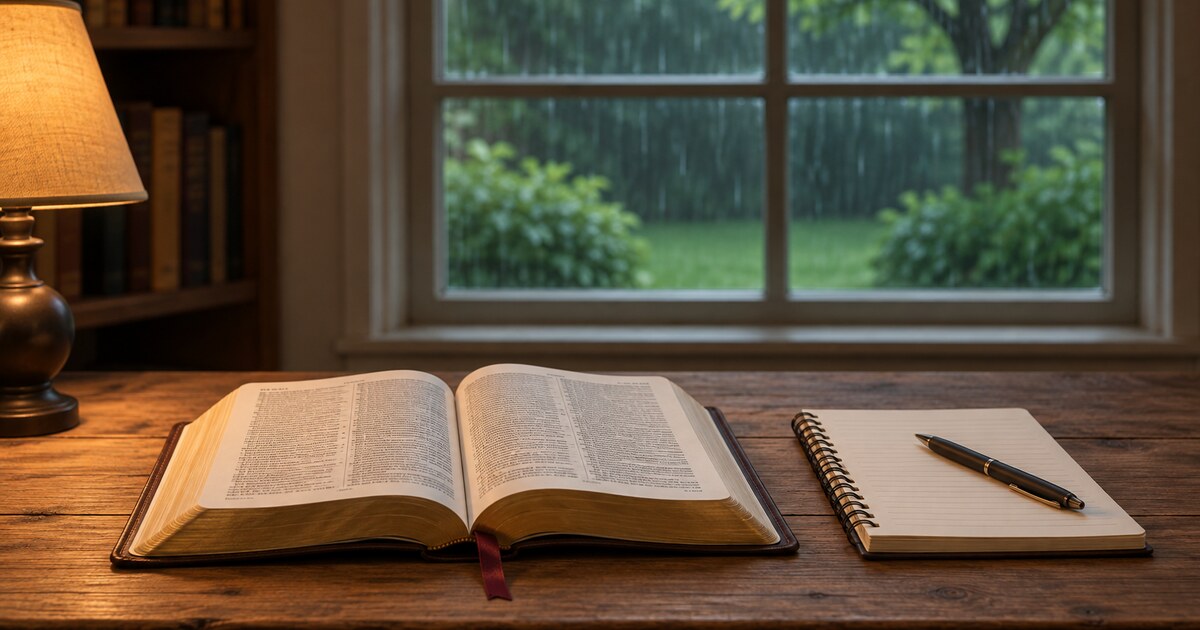
At the end of a long day, your mind may return to the one thing that went wrong. You can remember the unanswered message word for word, yet struggle to name anything that helped you get through the afternoon. Psalm 103 offers a way to pray in that moment. It does not ask you to call the day good. It asks you to remember that the difficult part is not the whole story.
To pray Psalm 103 with gratitude, read the opening verses slowly, name one mercy you might otherwise forget, and respond to it in your own words. If you want to write, record one specific moment rather than making a list you feel obliged to finish. You can do this with the first five verses or read the entire psalm if you have time.
Begin where the psalm begins
In the first two verses the psalmist speaks to his own soul. That matters when you are tired or distracted. He is not waiting until gratitude arrives on its own. He is inviting his attention to return to God. The opening is not an instruction to manufacture an emotion; it is a way to turn toward someone.
Read verses 1 and 2 twice. On the first reading, notice who is speaking and who is being praised. On the second, notice the call not to forget. Then leave the page open for a few moments. There is no need to find the most important blessing of the week. A friend who listened, the opportunity to correct a mistake, or the patience someone showed you might be enough to begin.
Try to name what happened without making it more dramatic. Instead of “I am grateful for people,” try “Someone waited while I found the right words.” That one detail helps you see the care that was actually offered. It can also show you what you might want to offer another person tomorrow.

Read the list of mercies without turning it into a test
Verses 3 through 5 speak about forgiveness, healing, rescue, steadfast love, and renewal. Read them as the psalmist's language of praise, not as a checklist your life must satisfy before you can pray. If illness or loss makes a particular verse difficult, you do not have to pretend it is easy or treat it as a promise about what will happen tonight. You can tell God which words you are struggling to receive.
Choose one phrase to stay with. If forgiveness stands out, you might remember a real apology and ask for help repairing something you cannot fix with words alone. If compassion stands out, notice whether you have demanded more of yourself than you would ask of someone you love. The practice is to let the words direct your attention, not to produce the right conclusion on cue.
You could pray: “God, I am grateful that I had another chance to listen today. I am also carrying the part of the conversation I cannot repair on my own. Help me remember your kindness without using it to avoid what I need to do.”
Let the rest of Psalm 103 widen your attention
The psalm does not stop with what the speaker personally received. In verse 6, it turns toward God's justice for people who are oppressed. Later it describes compassion alongside the frailty of human life, and ends with praise extending beyond the individual. That movement keeps a gratitude practice from becoming a search only for what made you comfortable.
If you read the whole psalm, make room to notice someone else's need. Perhaps you received patience at work but did not extend it to the person waiting for you. Perhaps a family member made time for you while managing a burden of their own. Gratitude can be a reason to thank them specifically, make space for them, or follow through on something you promised.
Psalm 103 also helps distinguish appreciation from denial. You can be thankful for a neighbor's kindness and still need help. You can remember a good moment without deciding that what hurt was acceptable. On days when you have both a thank-you and a lament, write or pray both. They can belong to the same conversation with God.
A five-minute prayer and journal practice
Spend the first minute reading verses 1–5 aloud if you can. For the next minute, sit without trying to write. Then use two minutes to name the moment you remembered and what it meant to you. Use the final minute for a brief prayer or to choose one act of gratitude that is possible tomorrow. If you only have a minute altogether, read verse 2 and name one mercy.
Journal question: What happened today that I am likely to forget, and what might change tomorrow if I remember it?
For example, a note might say: “I was about to send a sharp reply. A colleague asked whether I wanted to talk it through first. Tomorrow, I want to offer someone else a pause instead of an instant answer.” You do not need to repeat the whole conversation or explain every feeling. Keep enough detail to remember why the moment mattered.
If gentle jazz helps you settle, play a quiet instrumental track after the reading and leave it low enough that you can hear yourself think. If music competes with the words or silence helps more, turn it off. The music is optional; it is not the measure of whether the prayer went well.
Keep one thing worth remembering
The next evening, you can return to the same verses without needing to remember something more impressive. The habit is simply to stop long enough to see what a hurried day might hide. Some nights you may have several things to name. On others you may only have the honesty to admit you are still looking. Both are places from which to pray.
If this rhythm of reading, prayer, and a brief written response is useful, explore A Psalm Journey for other guided ways to spend time with a single psalm.